


13 Jan Piazza Farnese: Rome’s Most Composed Renaissance Stage
Walk a few steps from the chaos of Campo de’ Fiori and the atmosphere shifts completely. Piazza Farnese is calm, symmetrical, and almost aristocratic in its restraint. It feels like stepping into a different Rome — one shaped by power, geometry, and Renaissance ambition. If Campo de’ Fiori breaks every rule of what a Roman piazza should be, Piazza Farnese is the textbook example: a church or palace anchoring the space, a clear axis, balanced façades, and a central focal point. This is the kind of square people imagine when they search for “Piazza Farnese Rome” or “Renaissance piazzas in Rome.”
The piazza is dominated by Palazzo Farnese, one of the greatest Renaissance palaces in Italy and a major search term in its own right (“Palazzo Farnese history,” “Who built Palazzo Farnese?”). Designed by Antonio da Sangallo the Younger and later refined by Michelangelo, the palace was the architectural announcement of a family rising to the highest ranks of power. When Alessandro Farnese became Pope Paul III, the building became a statement: this is what authority looks like.
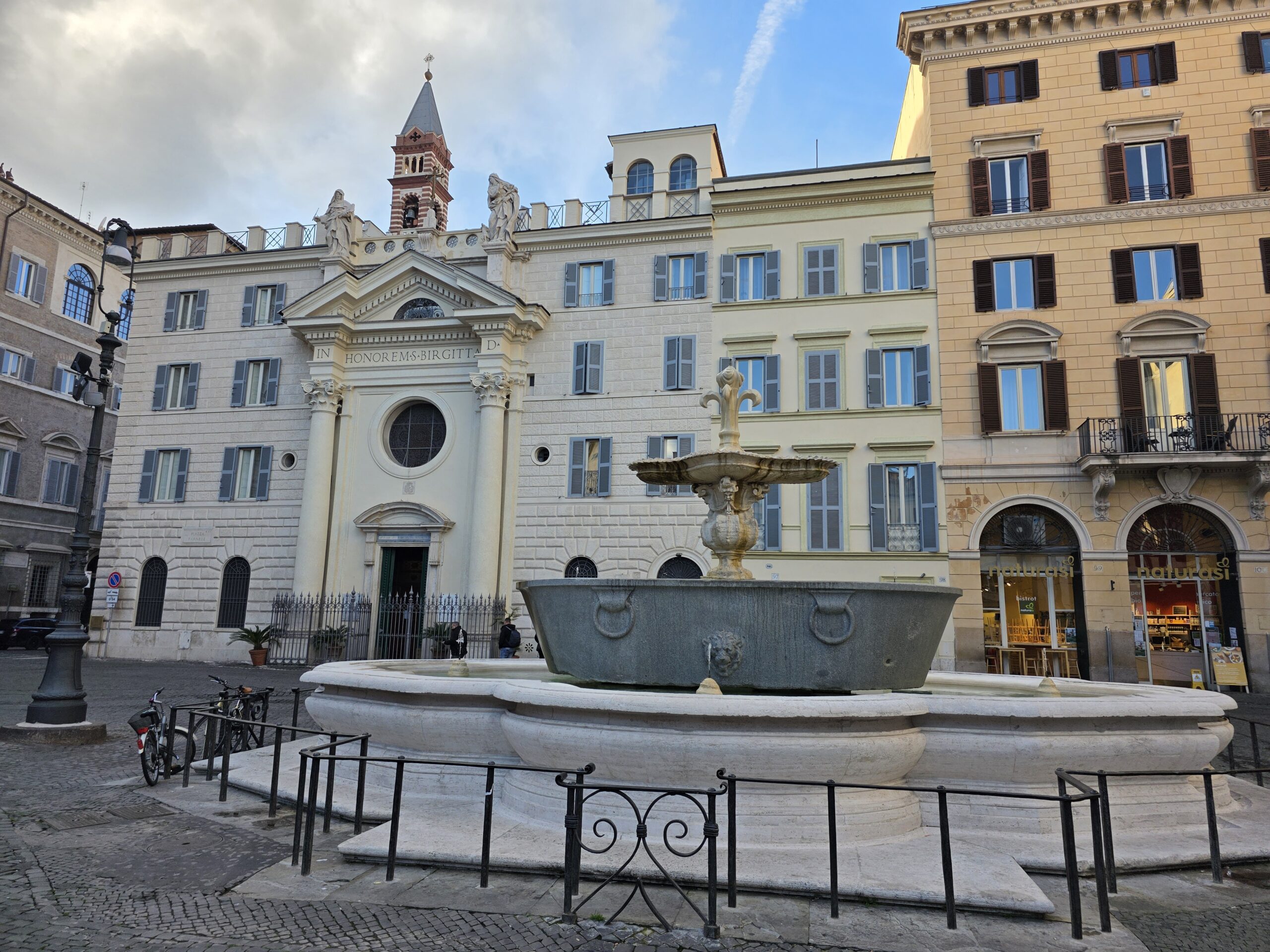
The two monumental Piazza Farnese fountains — carved from ancient basins taken from the Baths of Caracalla — reinforce that sense of order. Their placement is deliberate: a symmetrical framing device that turns the piazza into a formal outdoor room. Visitors often ask what the fountains are made from or why they look so ancient; the answer lies in Rome’s habit of reusing imperial fragments to express Renaissance prestige.
Unlike Campo de’ Fiori, Piazza Farnese was never a market square. It was a stage for diplomacy, ceremony, and elite presence. Even today, with the French Embassy occupying Palazzo Farnese (another common search query: “Can you visit Palazzo Farnese?”), the atmosphere remains diplomatic and composed. The building’s role as the embassy adds a layer of quiet exclusivity — the sense that this is still a seat of power, just as it was in the 16th century.
Piazza Farnese is Rome at its most architectural — a place where proportion, light, and stone do the talking. It’s the counterpoint to Campo’s chaos, and that contrast is what makes the two spaces so compelling together. One is unfiltered life; the other is controlled beauty. One is improvisation; the other is design.
Rachel Medina
Posted at 08:45h, 24 JanuaryLorem ipsum dolor sit amet, consectetuer adipiscing elit. Aenean commodo ligula eget dolor. Aenean massa. Cum sociis Theme natoque penatibus et magnis dis parturient montes quis.